
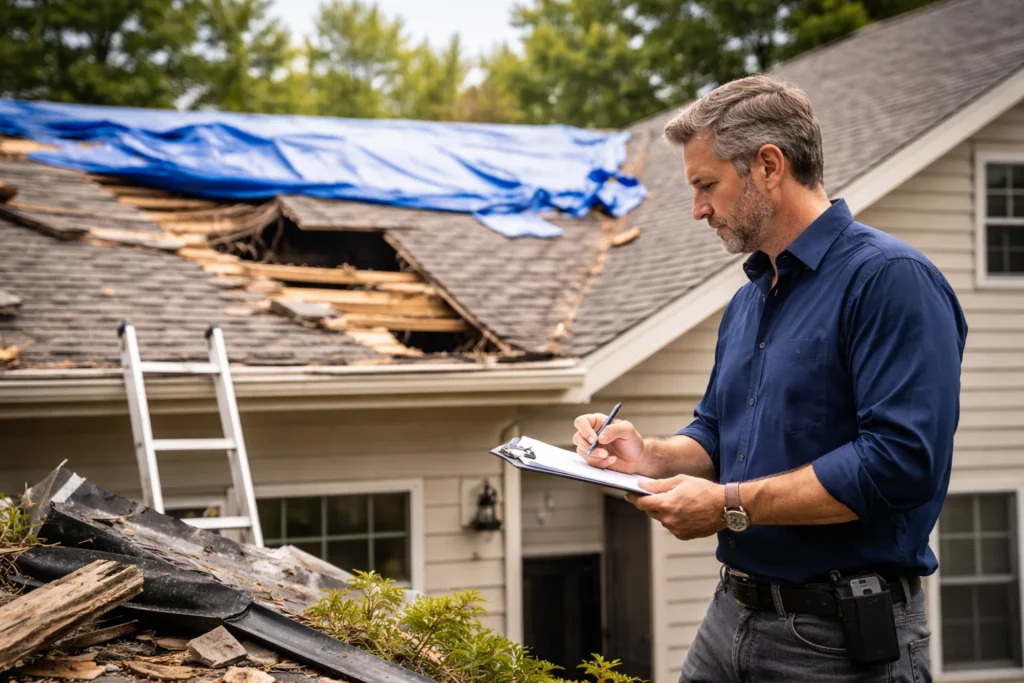
The day after property damage is disorienting. You’re staring at a soaked ceiling, a torn-up roof, smoke-stained walls, or flooring that used to be flat and now buckles under your feet. The question that quickly follows is practical and urgent: when to hire a public adjuster—and whether bringing one in could protect your financial recovery.
This decision matters more than most people realize.
Insurance claims are not just paperwork. They are financial negotiations wrapped in policy language. The timing of professional representation can significantly affect how thoroughly damage is documented, how accurately it’s valued, and how confidently it’s negotiated. If you’re wondering when to hire a public adjuster, this guide will walk you through the specific signs, scenarios, and calculations that can help you decide with clarity.
Let’s break it down.
What a Public Adjuster Actually Does
Before deciding when to hire a public adjuster, it helps to understand the role clearly.
Public Adjuster vs. Insurance Company Adjuster
Your insurance company assigns an adjuster. That adjuster works for the insurance company.
A public adjuster works for you.
It’s that simple—and that important.
Insurance company adjusters evaluate claims on behalf of the insurer. Their responsibility is to assess coverage and calculate payment based on the policy. A public adjuster, on the other hand, represents the policyholder. Their role is to document damage, interpret the policy, prepare the claim properly, and negotiate for a fair settlement.
Different sides of the table. Different incentives.
Core Responsibilities of a Public Adjuster
A qualified public adjuster typically handles:
- Full property damage inspection
- Detailed documentation and photographic evidence
- Policy review and coverage analysis
- Preparation of estimates and claim submissions
- Negotiation with the insurance company
- Reopening or supplementing underpaid claims
In complex losses—especially fire, major water, storm, or structural damage—this expertise can make a measurable difference.
How They’re Paid
Public adjusters typically work on a contingency basis. That means:
- No upfront payment
- A percentage of the claim settlement
- They are paid only if you are paid
The financial alignment is straightforward. Their compensation depends on maximizing the outcome of your claim.
When to Hire a Public Adjuster Immediately
There are moments when waiting is risky.
If you’re trying to determine when to hire a public adjuster, these are clear “act now” scenarios.
1. After Major Property Damage
Significant losses often trigger closer scrutiny from insurers. Examples include:
- Fire damage
- Hurricane or windstorm destruction
- Hail claims affecting roofing systems
- Extensive water damage
- Structural compromise
Large claims require detailed documentation. A missed category of damage—such as smoke infiltration inside wall cavities or hidden moisture behind cabinetry—can reduce your settlement dramatically.
The larger the loss, the higher the stakes.
2. When the Settlement Offer Feels Low
Trust your instincts. If something feels off, it probably deserves a second look.
Red flags include:
- Missing rooms or line items in the estimate
- Underestimated square footage
- Low repair pricing compared to contractor bids
- Heavy depreciation applied without explanation
- Pressure to settle quickly
A public adjuster can audit the insurer’s estimate and compare it to independent valuations. Often, the difference isn’t small.
3. When the Claim Is Delayed or Denied
Some claims stall. Others are partially denied based on technical interpretations.
Warning signs include:
- Repeated requests for documentation you’ve already submitted
- Long communication gaps
- Denials citing exclusions you don’t fully understand
- Partial approvals with unexplained omissions
If you’re spending hours emailing, calling, and re-submitting paperwork, it may be time to consider when to hire a public adjuster instead of continuing alone.
4. When the Damage Is Complex or Hidden
Not all damage is obvious.
Consider situations involving:
- Mold growth behind walls
- Electrical system compromise
- Foundation shifts
- Code upgrade requirements
- Business interruption losses
These losses require careful analysis and often specialized estimating software or expert consultation. Handling them without professional guidance increases the chance of underpayment.
When It’s Smart to Hire a Public Adjuster Early
Timing matters. And sometimes the right moment is before mistakes are made.
Before Filing a Large Claim
If you’ve experienced significant damage but haven’t yet filed, this is an ideal window.
Why?
The first submission shapes the trajectory of the entire claim. Initial documentation, recorded statements, and repair scopes can influence everything that follows. Errors at this stage can be difficult to reverse.
If you’re unsure how to structure the claim properly, this may be exactly when to hire a public adjuster.
When You Don’t Fully Understand Your Policy
Insurance policies contain layers:
- Replacement cost vs. actual cash value
- Ordinance and law coverage
- Exclusions and endorsements
- Deductibles specific to wind or hurricane
Misinterpreting coverage can leave money unclaimed. A public adjuster reviews the policy through the lens of recovery—not limitation.
When You May Not Need One
Professional credibility requires honesty.
Not every claim requires representation.
Situations where hiring a public adjuster may not be necessary include:
- Very small losses under a few thousand dollars
- Straightforward claims with prompt, transparent insurer cooperation
- Minor damage fully covered and clearly itemized
If your insurer responds quickly and fairly, the process may move smoothly without added representation.
But be realistic. Small claims can grow when hidden damage appears.
Warning Signs You’re Handling the Claim at Your Own Risk
Claims are draining. Emotionally and mentally.
Ask yourself:
- Are you overwhelmed by paperwork?
- Do contractor estimates conflict with the insurer’s numbers?
- Are you being asked technical questions you’re unsure how to answer?
- Do you feel pressured to accept a settlement?
If the stress level keeps rising, that may be your signal about when to hire a public adjuster.
You deserve clarity—not confusion.
Timing Matters: The Cost of Waiting
Delaying representation can create unintended consequences.
Evidence Deteriorates
Water damage spreads. Mold develops. Structural instability worsens.
If damage evolves before it’s properly documented, disputes may arise about what was “original” versus “new.”
Deadlines Matter
Policies often require:
- Prompt notice of loss
- Submission of proof of loss forms
- Supplemental claims within defined windows
Missed deadlines weaken negotiating leverage.
Accepting Too Quickly
Once you sign a settlement agreement, reopening the claim becomes more difficult. Not impossible—but harder.
If you’re questioning the adequacy of an offer, that’s often the moment to evaluate when to hire a public adjuster before signing anything.
Real-World Scenarios
Let’s look at practical examples.
Scenario 1: The Underestimated Roof
A homeowner receives a hail damage estimate covering partial shingle replacement. Their contractor insists the entire roof system requires replacement due to code requirements.
Without representation, the homeowner accepts the partial payment. Months later, full replacement costs exceed the settlement.
Had they evaluated when to hire a public adjuster during the dispute phase, the code-related requirements may have been included from the start.
Scenario 2: The Fire Loss with Hidden Smoke Damage
Surface cleaning is approved. But HVAC ductwork, insulation, and framing retain smoke contamination.
A public adjuster coordinates comprehensive inspections, leading to a broader, more accurate claim scope.
Scenario 3: Business Interruption Confusion
A commercial property owner struggles to calculate lost income after storm damage.
Business interruption coverage is complex. Proper documentation of revenue loss and continuing expenses is critical. A public adjuster helps structure and substantiate the financial claim.
Is Hiring a Public Adjuster Worth It?
Let’s look at it logically.
Here’s a simplified comparison:
| Scenario | Handling Alone | Hiring a Public Adjuster |
| Damage Documentation | Limited to personal knowledge | Professional inspection and detailed scope |
| Policy Interpretation | Basic reading | Coverage analysis aligned to recovery |
| Negotiation | Direct with insurer | Structured negotiation |
| Time Investment | High | Reduced |
| Financial Outcome | Variable | Often higher, depending on case |
Public adjusters charge a percentage. But if the negotiated settlement increases significantly, the net outcome can still be favorable.
The key is evaluating when to hire a public adjuster based on claim size, complexity, and confidence in your ability to manage the process.
How to Choose the Right Public Adjuster
Not all adjusters are the same. Selection matters.
Look for:
- Proper state licensing
- Experience with similar types of claims
- Transparent fee agreements
- Clear communication practices
- Local knowledge of building codes and regional weather patterns
Ask direct questions. Request examples. Review contracts carefully.
A strong professional should welcome scrutiny.
Frequently Asked Questions
1. When is the best time to hire a public adjuster?
As early as possible in large or complex claims, ideally before final settlement discussions begin.
2. Can I hire one after receiving an offer?
Yes, especially if you believe the offer undervalues your loss.
3. How much does a public adjuster cost?
Typically a percentage of the final settlement, agreed upon in advance.
4. Will hiring one slow down my claim?
In many cases, structured representation improves efficiency rather than slowing it.
5. Can they reopen a closed claim?
Sometimes, depending on policy terms and timing.
6. Is it worth it for small claims?
Usually not, unless complexity is involved.
7. Do I still communicate with my insurer?
Your public adjuster typically manages primary communication.
8. What if my claim was denied?
Denials can sometimes be challenged with proper documentation.
Final Thoughts: Making the Decision with Confidence
Knowing when to hire a public adjuster isn’t about distrust. It’s about preparedness.
If your claim is small and straightforward, you may not need representation. But if the loss is significant, complicated, delayed, disputed, or emotionally overwhelming, professional guidance can shift the balance.
Property damage is disruptive enough. Financial uncertainty doesn’t need to compound it.
The right timing can protect your investment. It can clarify your rights. And it can position you to recover fully—not partially.
If you’re still unsure when to hire a public adjuster, ask for a consultation before signing anything. A short conversation today could prevent a long regret tomorrow.
Clarity now. Confidence later. That’s the difference timing makes.